Front cover of The Hardness of Men by Danny Gentry: cream title lettering over a black sky, with a railroad track and telegraph poles running toward a low orange sun on the Texas horizon.

A Western Noir

The Hardness of Men

Danny Gentry

The town slept easy. It never asked why.

Coming 2027.

Trailer

Italy, Texas, 1900.

Front cover of The Hardness of Men by Danny Gentry.

The book

Italy, Texas, 1900. Seventeen-year-old Will Reece has buried his father, a gentle preacher the whole county pitied, and come up the Katy to learn to be a different kind of man. His uncle Gus is the town marshal. Gus doesn't hold trials. He doesn't need to. When trouble comes to Italy, he rides out after dark, and by morning the trouble is gone and nobody asks where it went.

Then a widow in black steps off the train.

She is gracious, and grieving, and very good with figures, and before long the whole town has taken her in. Will can't stop watching her. With the biggest payday in the town's history coming down the line, he is about to find out what his uncle's kind of justice really costs, and who has been counting on it all along.

A literary western noir about fathers and sons, the stories towns tell about themselves, and the hardness we mistake for strength.


From the book

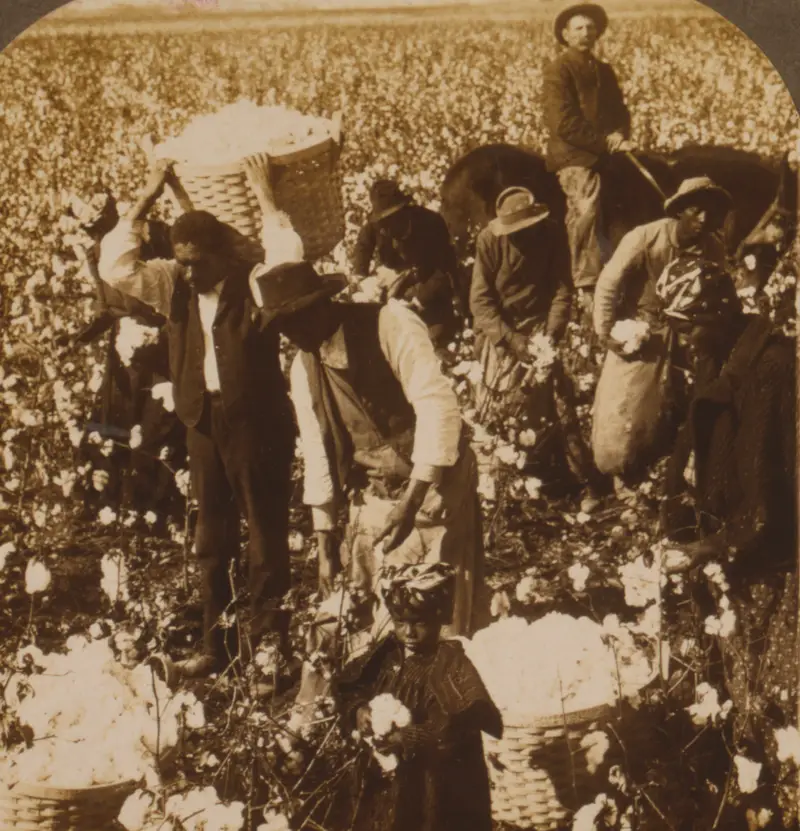
Background: cotton pickers near Dallas, Texas, 1907. Berry, Kelley & Chadwick. Library of Congress.

“A town that has quit asking why it sleeps easy has signed something it would rather not read over.”

The real Italy, Texas

The town in this novel is real.

  1. 1870

    The Missouri, Kansas and Texas Railway is incorporated in Kansas.

    Source: Wikipedia
  2. 1872

    The Katy becomes the first railroad to enter Texas from the north.

    Source: Wikipedia
  3. 1879

    The Aycock brothers build the first house on the town site: home, grocery and post office in one.

    Source: TSHA Handbook
  4. 1880

    Waxahachie postmaster Gabriel J. Penn names the town Italy, for a climate like “sunny Italy.”

    Source: TSHA Handbook
  5. 1890

    December: the Katy reaches Italy, and the town becomes a market center.

    Source: TSHA Handbook
  6. 1891

    Italy is incorporated and its first newspaper is published.

    Source: TSHA Handbook
  7. 1896

    The Katy announces its Katy Flyer, running between St. Louis and southwest Texas.

    Source: Union Pacific
  8. 1900

    Italy's population reaches 1,061, with six churches. The novel opens this spring.

    Source: TSHA Handbook
  9. 1900

    September 8: the Galveston hurricane kills more than 6,000 people.

    Source: History.com
  10. 1901

    January 10: Spindletop blows in near Beaumont, the birth of the modern petroleum industry.

    Source: TSHA Handbook
  11. 1912

    Ellis County grows a record 187,449 bales of cotton.

    Source: THC marker
  12. 1913

    Interurban electric trains begin running between Dallas and Waco through Italy.

    Source: TSHA Handbook
Black and white photograph of adults and small children bent over rows of cotton plants in a wide field.
Two families picking cotton on a farm near Waxahachie, Ellis County, 1913.Lewis Hine, National Child Labor Committee. Library of Congress.
Sepia photograph of a field of wrecked houses and timber stretching to the horizon.
Galveston after the hurricane, 1900.Keystone View Company. Library of Congress.

The town

Italy almost had another name. In 1879 residents debated Houston Creek, after the creek where Sam Houston reportedly camped, but the post office rejected it to avoid confusion with another Houston Creek (TSHA). Its population doubled from 500 in 1890 to 1,061 in 1900. Italy Institute, Southwestern Normal College and Hope Institute drew more than 350 students by 1894.

Source: Italy, TX, Handbook of Texas Online (TSHA)

Black and white photograph of a steam locomotive and freight cars standing in floodwater, with men on the car roofs.
A Katy train in floodwater, about 1904.Library of Congress.

The Katy

The railroad's nickname came from “KT,” its timetable abbreviation and stock symbol, which became “the Katy” in the 1890s. It reached Dallas in 1886, Waco in 1888 and Houston in 1893. It was a railroad of its era: the Dalton Gang robbed a Katy train in Indian Territory in 1892 (Wikipedia).

Source: Missouri, Kansas and Texas Railroad (Wikipedia)

Black and white photograph of a tall wooden oil derrick on bare, muddy ground, with more derricks in the distance.
The Lucas gusher at Spindletop, near Beaumont, 1901.Library of Congress.

Texas in 1900

Texas counted 3,048,710 people in 1900, up from 2,235,527 in 1890 (Texas State Library). That year Butch Cassidy's Wild Bunch sat for a portrait in a Fort Worth studio, and the Pinkertons put it on wanted posters across the West (Wikipedia). Within months, Spindletop would announce the oil age. The old West and the modern one overlapped, and this novel lives in that seam.

Sources: United States and Texas Populations (Texas State Library); John Swartz (Wikipedia); Spindletop Oilfield (TSHA)

The people

  • Will Reece, seventeen

  • His uncle Gus, the town marshal

  • A widow in black

Portrait of Danny Gentry.

About the author

Danny Gentry

Danny Gentry, Ed.D., spent more than twenty-two years leading schools and is the author of The Collapse, The Serpent of Houston Creek, and The Kindness Tree.

The town slept easy. It never asked why.

Get notified

Agents and editors: drdan@dannygentry.com